A Week in a Lighthouse – Sitka, Alaska
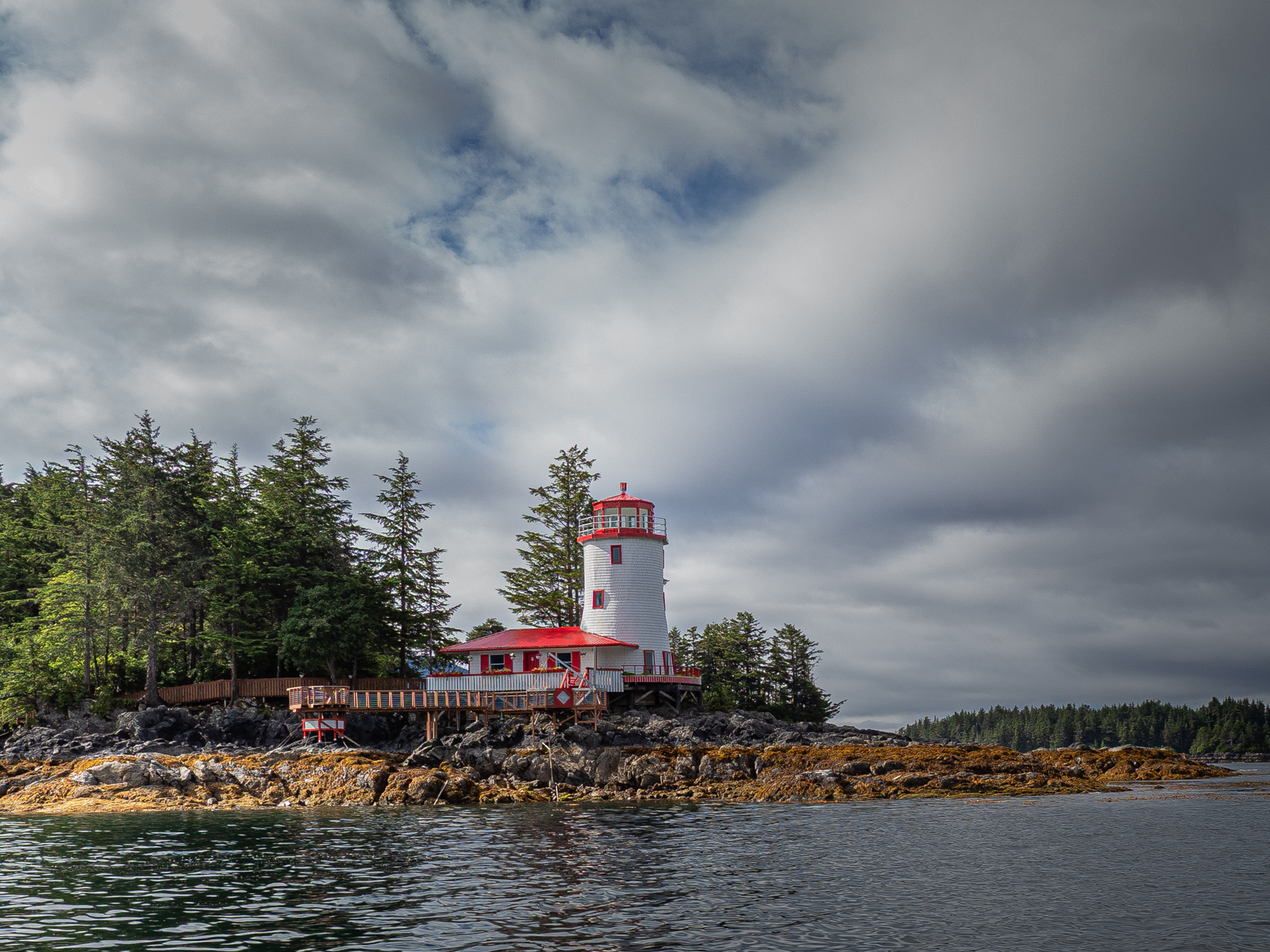
After visiting our daughter, Eliza Leigh, in Ketchikan, she joined us for a week in Sitka, where we stayed together in the Sitka Lighthouse.
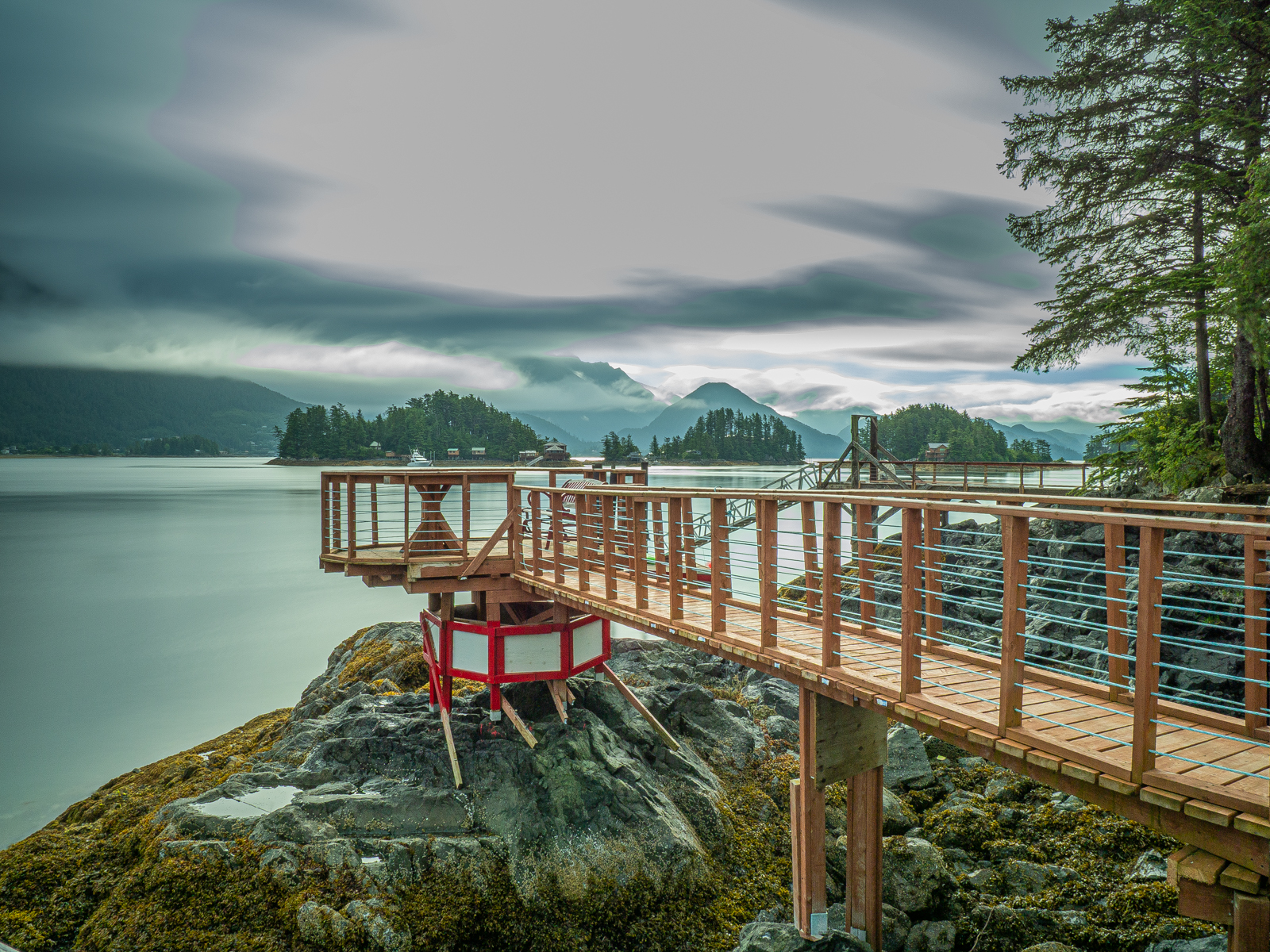
The lighthouse was built in 1983 by Burgess Bauder, a legendary veterinarian, diver, humanitarian, and entrepreneur who decided to build a fully functional lighthouse on a small island just offshore. In 2017, Sitka native Teal West purchased and renovated the property, preserving much of its original character while updating it for guests. Once known as the Rockwell Lighthouse, it now operates as a vacation rental, offering visitors the unusual opportunity to spend a week in a working lighthouse.
Stay, Explore & Celebrate in Alaska
Sitka has a fascinating history. The Tlingit people inhabited the region for thousands of years before the Russians arrived in the late 18th century. Alexander Baranov, who later became the first governor of Russian America, established a fort here in 1799. Conflicts with the Tlingit eventually led to a major battle in 1804. Sitka later became the capital of Russian America and remained so until the United States purchased Alaska in 1867.
The formal transfer took place in Sitka, an event still commemorated every year on Alaska Day. Much of the town’s Russian history remains visible, particularly St. Michael’s Cathedral, the beautiful Russian Orthodox church in the center of town.
Sitka is very much a waterfront town, with a busy harbor full of commercial fishing boats and floatplanes coming and going throughout the day. Unlike many of the more sheltered communities along Alaska’s Inside Passage, Sitka faces the open Pacific. The mountains of Baranof Island rise above the town, with thick temperate rainforests stretching almost to the water. And the weather can change in a hurry, from sunshine to wind and heavy rain in a matter of minutes.
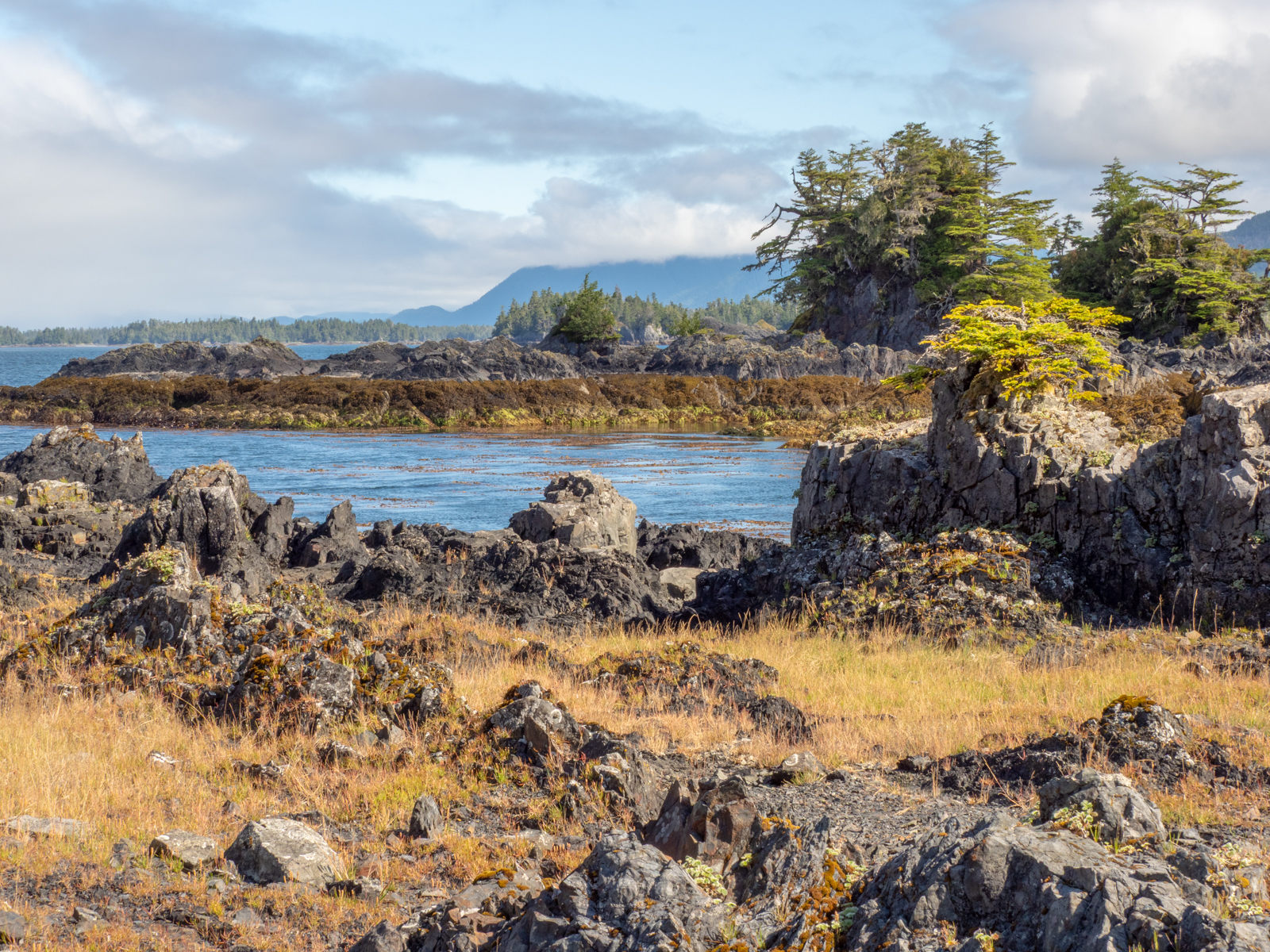
One of the things that struck us most was the number of small rocky islands scattered around Sitka. Some are little more than reefs that disappear at high tide, while others rise a hundred feet or more above the water. Many have steep rocky cliffs with Sitka spruce and western hemlock growing right out of the cracks. Years of winter storms have left some of the trees twisted and stunted. Between the islands, strong tidal currents run through narrow channels and thick kelp beds.
Many of these islands are uninhabited, while others have cabins and some pretty impressive homes perched on the rocky bluffs. It’s interesting to see how people have adapted to living in such remote locations. Some homes have rainwater collection systems, solar panels, and private docks with skiffs for the short, but sometimes wet and windy, ride into town. Others, including the lighthouse, get their electricity through underwater cables connected to the power grid in Sitka.
It’s quite a mix of residents, commercial fishermen, artists, vacation homeowners, and people who simply prefer their privacy. I imagine living out there in the winter is a whole different experience from the relatively mild summer months.
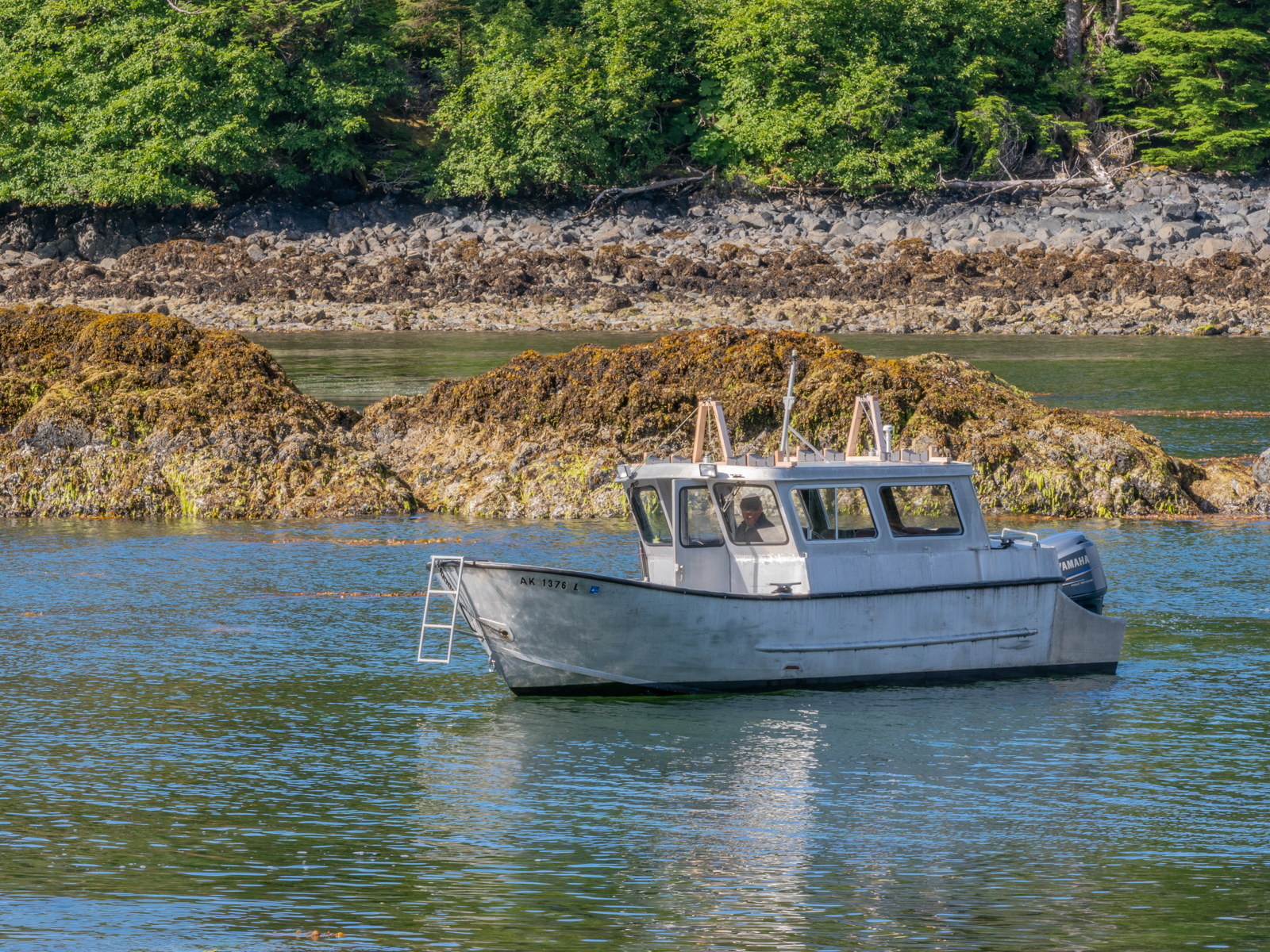
We brought cameras instead of fly rods on this trip, so fishing wasn’t on the agenda, although the waters around Sitka are famous for salmon and halibut. Instead, we spent our time exploring by kayak and using the small outboard-powered tender provided by the lighthouse owner. The tender also came in handy for trips into town to explore and pick up groceries.
Kayaking around the islands and into the sheltered coves was one of our favorite activities. We saw enormous Steller sea lions, sea otters, and plenty of bald eagles perched in the treetops. Humpback whales were also a common sight just offshore, where they fed in the deeper waters beyond the islands.
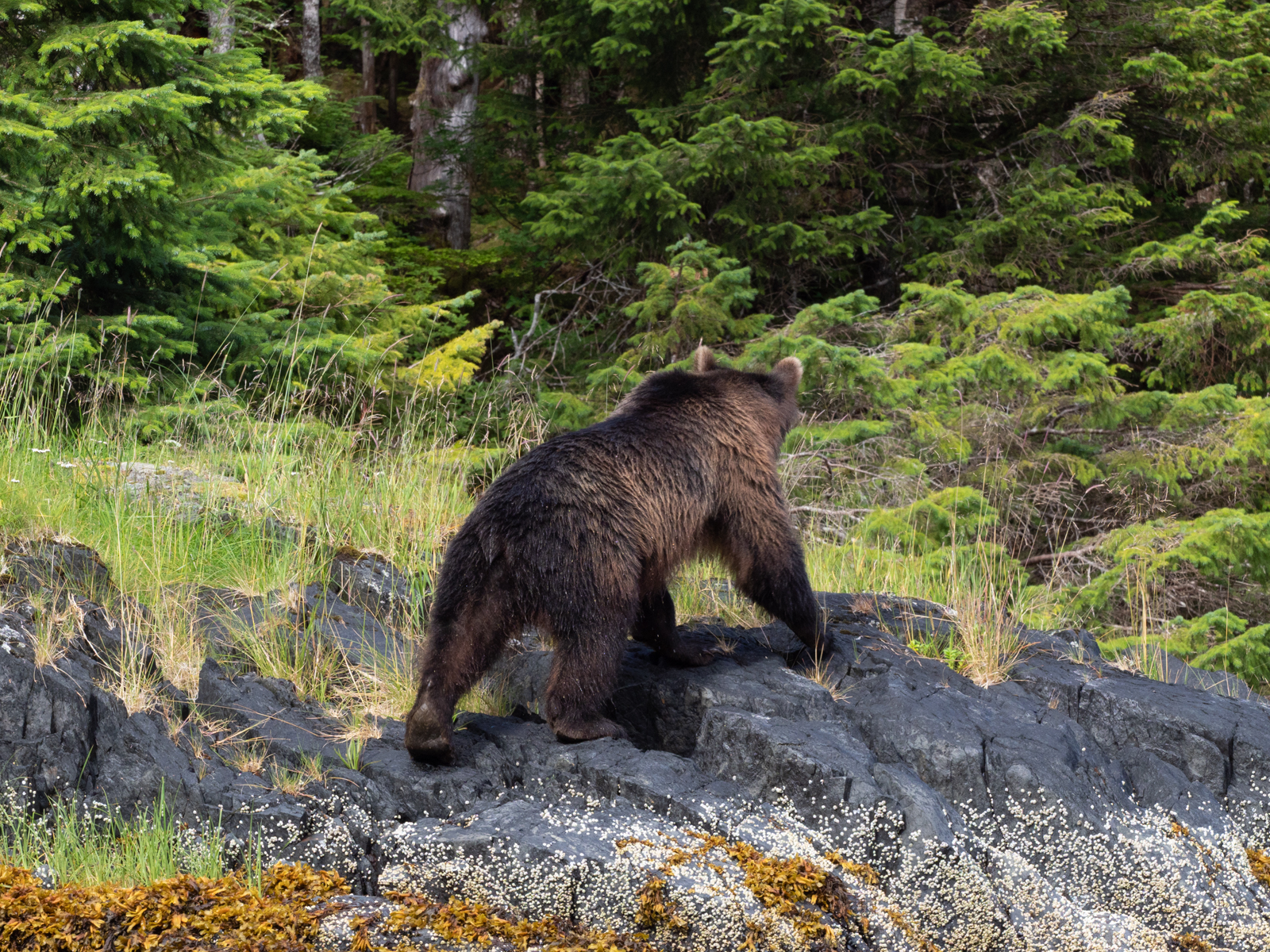
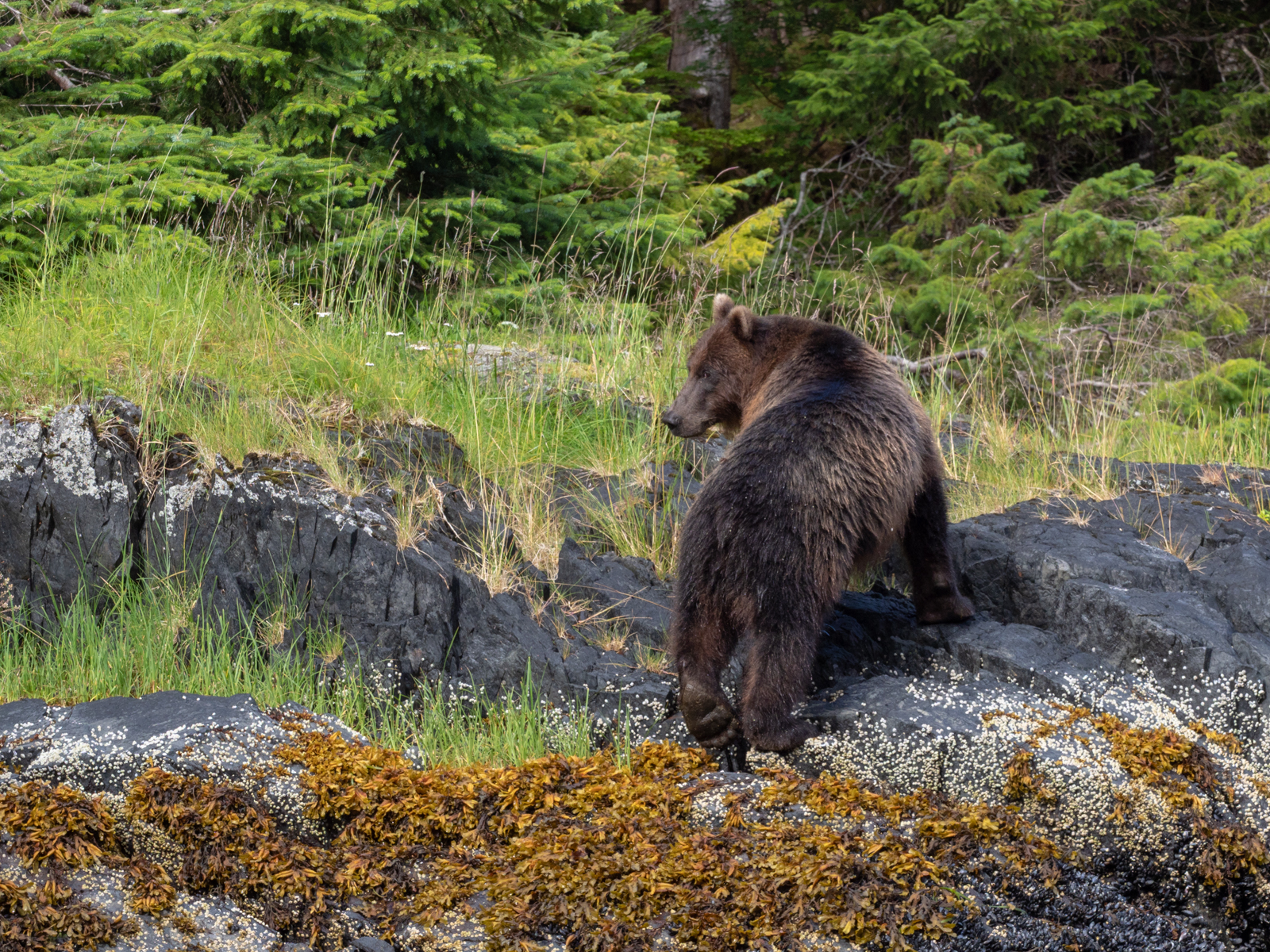
Brown bears are plentiful on Baranof Island, and they occasionally wander into town, particularly along rivers and shorelines. Sightings near homes and businesses aren’t unusual, especially when natural food becomes scarce. Bear encounters are something hikers need to take seriously, particularly those who venture into remote areas alone. It’s a good idea to understand bear behavior and take the usual precautions before heading into the backcountry.
For a relatively small town, Sitka has plenty to see and do, along with some excellent restaurants and places to stay. Among the better-known attractions are Sitka National Historical Park, the Alaska Raptor Center, and the Fortress of the Bear.
The Russian Bishop’s House, a restored 19th-century building that now serves as a museum, is another interesting stop. And of course, there’s St. Michael’s Cathedral, right in the middle of town. You don’t have to look very far to find reminders of Sitka’s Russian past.
In recent years, however, Sitka has experienced a huge increase in cruise ship tourism. More than 600,000 cruise passengers visited in 2024, a remarkable number for a town with a population of roughly 8,000. As you might imagine, not everyone is thrilled about it. The cruise industry brings considerable revenue to the local economy, but it also brings crowded streets, traffic, and thousands of visitors arriving at once.
In May 2025, residents voted on a proposal that would have limited cruise visitors to 300,000 annually and 4,500 per day, along with restrictions on the cruise season. The measure was defeated by a substantial margin, with roughly 73 percent voting against it. Apparently, the community is still trying to figure out how to balance the economic benefits of tourism with preserving the town’s character.
Spending a week in the lighthouse gave us a different perspective on Sitka than we would have had staying in town. We could kayak right from our little island, watch whales and sea lions from the property, and take the skiff into town whenever we needed something.
And there was always something going on outside, whether it was the weather, the tides, the fishing boats, or wildlife passing through.
Between the history, the mountains, the islands, and the wildlife, Sitka is one of the most interesting and beautiful places we’ve visited. And staying in a lighthouse for a week with our daughter made it even better.